Monday, April 30, 2018

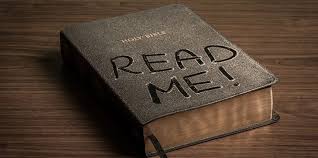
Easter Monday--notes on April's Reading the Bible in a Year

SORRY for the late PUBLISHING!
I meant to post this last month, but didn't get it done. Sorry, all.
We began a new calendar quarter of reading the Bible in a Year on Easter Monday, the first day of the Easter octave.  Christian history is full of traditions and teachings that are a vast reservior of wisdom for modern Christians. However we seldom take advantage of them. My Christian brothers and sisters from Africa are much more attuned to the wisdom of the ancestors when it comes to looking for wisdom in how we are to live.
The NT letter we are reading in the month of April is Paul's letter to the church at Corinth. Easter Sunday's lectionary text, and my preaching text from [Easter], came from the great 15th chapter of that letter, Paul's amazing defense of the resurrection. For Paul the only reality that governed his existence was the real, bodily resurrection of Christ that put him in touch with the grace of God. How Paul changed from a persecutor of the Way of Jesus into a tireless promoter of the Gospel is one of the great mysteries, but also great blessings in understanding Christian origins. The advice he was asked to give to the Corinthians and put down for them in this letter, is one of the great passages of pastoral wisdom collected in the first century after Jesus.
April's Gospel reading is from Mark. I remember that before we went on a pilgrimage to Israel with a group from my father's church, we were asked to read the Gospel of Mark, the shortest gospel, but the one that put the Jew Jesus into the immediacy of the Roman world, with all the complexities of that relationship right in the foreground. As we traveled the sites in Israel that Christian pilgrims visit, the scripture came alive for us in new ways. I was thrilled to see the places and sights that Jesus visited during his brief ministry. The ending of Mark provides great material for discussing how and why it was written--shorter or longer versions.
Our OT passages for April are the books of Joshua, Judges, and Ruth--stories from Israel's history after Moses and before its "kings." The stories describe the dilemmas of tribal organization without a strong central figure: how can the people defend themselves against enemies, internal and external, with different 'gods' and make a cohesive people? How can outsiders be part of God's people?
Finally in April, we make it through almost the whole Book of Psalms. Have you noticed how much of the identity of Israel is formed by singing its songs? Paying attention to what we sing and how we worship is part of our witness, too.
Keep Reading!
The reading schedule for reading the bible in a year can be found on the church website.

Saturday, February 17, 2018

TL;DR from Babylon Bee


Not able to keep up with the reading schedule for "Read the Bible in a Year?"

Best summary of the 66 books of the bible yet posted on Babylon Bee.
Yea, you can read this.

Thursday, February 1, 2018

Did you make the one month marker?

LCWABM is attempting to read the bible in one year. That is, some of us in the church are. I am working to make my own daily bible reading schedule transparent and disciplined. I have to admit that it's hard. I just made the schedule in January--through the first part of the Missionary Discourse in Matthew, chapter 10, completed the Acts story of the council in Jerusalem, chapter 15, all the Psalms up to the 23rd, and finished the whole book of Genesis, the stories of the patriarchs and matriarchs. It seems both familiar and new. I'm reading with eyes out for the relationships between all these texts, as well as ways to make them more familiar to the people I'm leading. Knowing and living these texts as our foundational stories has so much to do with the quality of our spiritual lives together. I'm grateful to the saints at 2666 Military Road for being intentional about this discipline. We can't appropriate the texts with understanding unless we are reading them in a community.
On to February!

Wednesday, January 17, 2018

Bible Reading, more notes

Yesterday a colleague told me about visiting the new Museum of the Bible in Washington DC. He allowed that he was pleasantly surprised at 1) the high quality of the design displays and 2) the wide (or wider than expected) views about the bible that are depicted. Those of us from more progressive traditions have been skeptical, considering the museum's source of funding and inspiration. Since our LTWABM is reading the bible this year, I'm hoping to organize a trip and see for myself.
Reading the bible is always a daunting task. The last time our church attempted this, we went straight through, from Genesis to Revelation. This time, we're following a more divided reading plan, and it may be more disconnected than what we are used to. Peoples from aural and oral cultures were much more used to memorization and keeping large amounts of text in their heads. With modern-day reliance on printed material, always available, we don't use our brains that way.  When we read something in one part of the bible, it's not immediately apparent that we can remember another part and make a connection. I'm hoping that be reading different selections in the bible over time, people can see the relationships between the different parts of the text.
However, the reading plan we're following is designed for pacing, not necessarily content. The stories of the patriarchs in Genesis do come up again and again in later books of the OT, as well as the gospels and the rest of the NT. However, the reading schedule is not designed to match those passages. I'll be doing that in the Adult Sunday morning class at 9:45am. Stay tuned.

Thursday, January 11, 2018

Back to the Bible - starting observations

Some folks at LCWBM [Little Church With a Big Mission] are going to read the bible in a year. New Year resolutions or no, reading the bible is always a good practice. I hope to encourage us all, and have each encourage each to be stewards of our brains and hearts for bible reading.
Here are some of my notes from nearly two weeks into task.
The schedule has us reading a gospel passage, another NT passage, a couple of psalms (or other wisdom literature) and then something from the rest of the Old Testament each day. Just because of the volume of words in each category, we have to read gobs from the OT, while we read just little bits from the NT. I find myself racing through Genesis and just chewing on Matthew.
Genesis stories are familiar but I always find something new. Did I remember that Abraham passed off poor Sarah as his sister twice?  Sarah could have her own say in #MeToo. This is why I object to reading the bible as a handbook for behavior. On what basis could one look at Abraham as exemplary in everything he does? Yes, he is held up as faithful, but consistently righteous?  Yet, God counts him as righteous, as Paul remembers in his letter to the Romans.
I'm now reading the Psalms with more sympathy for the way the psalmists zero in on righteousness as a defining characteristic of this God we worship. They are constantly (at least in this first section of the Psalms) contrasting God's righteousness with peoples' lack of righteousness. Psalm 1 has it right--there are two ways to be oriented in the world--one way leads to a flourishing life and one way leads to death. Judgement, meaning the ability to exercise discernment about which is which--is the characteristic that the psalmists seem to want to impart. Paying attention to the bedrock characteristics of Israel's God--justice and mercy--is the way that leads to life.
Those Acts passages we read last year in the Tuesday bible study group, are now getting another pass through, too.
I want to start reading with a hyperlink button so that I can annotate passages with a link to where they are re-iterated or re-interpreted in another part of the bible. It's fascinating!
Matthew, the thoroughly Jewish gospel, is the gospel to start making those NT - OT connections. That opening geneology? A connection to the patriarch Abraham, so that we will know that the NT is a continuation of the OT story.

Tuesday, November 14, 2017

Talk About Facing Fear

At "little church with a big mission" we're planning for Advent and Christmas, and we've settled on the theme of "facing fear" by affirming that there are "Angels Among Us."  Just as the angels of the Christmas story (and throughout the bible's history) start out by saying "Do Not Be Afraid," we can affirm those messages. Thanks to the Worship Design Studio, we have all sorts of tools for making this message real. But still, it's not just individual fears we are concerned about--it's the big community ones. After the violence in the First Baptist Church of Southerland Springs Texas, people who gather in churches can't help but think about a real anti-fear message.
I'm surprised at the toll this fear is taking on my parishioners and community. Someone actually asked me "can you tell us how to think about this?" My gut tells me that people of faith ought to have more guts than this. I didn't answer, but I thought "Do you really mean that you don't know? Don't you know and trust the good news that 'God's got this?' Where is your faith?"  Maybe I shouldn't be so harsh.
I do think that doesn't bode well for us that trust in God has been supplanted by trust in guns. Colleagues at Christian Century put it this way:
"In the United States, we worship our guns like no other nation in the world, and some will say more guns are the answer. I do not believe this. We need to be direct in saying the god of guns is a false god. As much as I believe Jesus is among the grieving, I believe he is also pressing on his church to engage with the powers and principalities and say “No more!” Our culture privileges the powerful; often our church culture does the same. Yet we know Jesus proclaimed a preferential option for people who are marginalized and oppressed. We need the church to be a place where we talk about why mass shootings happen. We need to have those conversations and let God be part of them. We need to decide whether the church will be not just a voice speaking but a body acting to bring change in human priorities and understanding. If we have any power left as an institution, we must work together for good, in Jesus’s name."
Text for last week's sermon from Joshua was "MAKE YOUR STAND."
As for me and my household, we will serve the LORD.
Buck up people!


Shared fear has become more important than shared responsibilities. And that’s the essence of fascism.  HENRY GIROUX

Tuesday, September 26, 2017

Your past makes a difference in how you face the future

In the past few weeks our little congregation has been seeing congregants who reap the fruits of decisions they have been making, little-by-little, over the course of their long lives, whether for good or ill. Some have put off making financial plans for the future. Some have neglected caring for the relationships of their families and friends. Some have difficulty facing the fact that we all will die.
It really does make a difference, those ways we choose to live, that benefit the future. Lives and communities are built up or torn down, small action by small action. Kindnesses done, or hurts nursed? What decisions are we putting off because we don't want to think about them? What choices are we making because we think that we can avoid death? Facing our future lives requires courage. And God is the one who alone holds the future.
When we acknowledge our limits and face the future with courage, grace can and does abound. Peace be with you.